Pure sequence
Three or more consecutive cards of the same suit, with no joker standing in for a missing card.
User guide · Indian English · 18+
This page explains the rummy card game most players mean by Indian rummy: a 13-card hand, a pure sequence, and a valid declaration. It is a reading guide to the table rules. It does not run an online gaming table, hold a balance, or take a payment.
The sections follow the order a new reader needs. Card rules come first. Online gaming differences, fair play, and the 18+ limit come after the hand itself is clear.
Rummy encompasses a popular family of matching card games where strategy, observation, and skill take center stage. During each round, players systematically draw and discard cards to organize their hand into valid combinations, primarily consisting of sequences (consecutive cards of the same suit) and sets (cards of identical rank across different suits).
The core objective is to form a complete, valid meld before your opponents and make a successful declaration, or alternatively, to minimize the penalty points from unmatched cards remaining in your hand. Please note that mastering card combinations and winning a round relates purely to gameplay; this site covers game mechanics exclusively.
Keep in mind that rules vary significantly across different variants. Classic Gin Rummy, Rummy 500, 21-Card Rummy, and 13-Card Indian Rummy each feature distinct card deals, melding requirements, and scoring structures. What constitutes a standard move in one variation may be penalized in another, making it essential to understand the specific rules of the format you choose to play.
The tutorials on this portal focus specifically on 13-Card Indian Rummy, a classic variant often referred to locally as Paplu. In this popular format, players receive a hand of 13 cards with the primary goal of arranging all cards into valid sequences and sets.
While this 13-card format represents what most players refer to when searching for Indian Rummy, it should not be confused with other regional or global variants. A 21-card round, Gin Rummy, or custom casino variations may share similar naming conventions, yet they enforce distinct melding criteria that could render an otherwise valid 13-card hand invalid.
Even within traditional 13-card play, exact rules can vary across published literature. The guidelines presented in this edition synthesize key references, including the traditional table rules cataloged on Pagat.com (contributed by Vasant Mali) and general overview standards found on Wikipedia, noting key distinctions where they diverge. Additionally, digital platforms typically incorporate custom operational features—such as drop penalties, point caps, and turn timers. These elements function as specific platform (house) rules rather than a standardized national mandate.
The steps below follow the 13-card table game described by Pagat. They are the usual shape of a round. They are not a promise that every app button works this way.
Three or more consecutive cards of the same suit, with no joker standing in for a missing card.
A sequence that uses a joker to fill a gap. This printed joker stands for the 6 of hearts. The group is valid as an impure sequence. It is not pure.
Cards of the same rank in different suits. This set is the 9 of hearts, the 9 of diamonds, and the 9 of clubs. A second 9 of hearts would not belong in it.
The printed joker is the card marked Joker in the deck. The wild joker is every card of the rank turned up at the start. Both can fill a gap in a set or an impure sequence. Neither can turn that group into a pure sequence while it is standing in for a different card.
If 8s are wild, 7♥ 8♥ 9♥ is still pure: the 8 of hearts is being the 8 of hearts, not a substitute. J♥ Q♥ and the 8 of spades is impure when that 8 stands for the 10 of hearts or the king of hearts. It is not playing as the 8 of hearts.
A declaration uses these groups together. One pure sequence on its own is not enough. See the sequence rules and examples, then the declaration guide.
Online gaming does not change a meld. In the rummy card game, a sequence is still consecutive cards of one suit, and a set is still one rank in different suits. What changes is who shuffles and who watches the clock. At a physical table you can see the pack. In real-time multiplayer, a server deals the seats, opens one discard, and starts a turn timer you do not control.
You see your own 13 cards. You do not see the shuffle, the other hands, or the next card in the stock. An on-screen sorter, a drop button, or a point cap is a product feature of that table. Pagat’s description of the card game does not include an 80-point cap or a first-turn pack. An app may add both. Those additions are house rules. They are not a second, secret version of a pure sequence.
Before the first draw, three facts are worth reading on the table itself. How many decks are in the pack. Whether a printed joker and the turned rank are both wild. Whether groups stay hidden until someone declares. If the screen does not say, you are not looking at the round this guide can describe. The beginner’s guide separates that shared card logic from the buttons an app may add.
A real-time multiplayer seat also means the other chairs may be people, or they may be accounts you cannot identify. This page cannot tell those apart. It can only tell you how to check the hand you are about to show.
Fair play in this card game has two layers, and only one of them is visible. The visible layer is the declaration: two sequences, one of them pure, and every card inside a valid group. You can count that with the cards on the screen. The hidden layer is the deal. Online play asks you to trust that the stock was shuffled and that the result was not chosen after you drew.
This guide does not audit shuffles, and it does not certify any app. A secure platform, in the ordinary sense of the words, is an operator that states who runs the table, how an account is closed, and what happens to a payment. Look for an age gate, a published privacy notice, and a way to limit time or deposits before an account exists. A wheel, a reward total, or a withdrawal screen is not evidence of a fair shuffle.
If a result looks wrong, start with the cards rather than with the animation. Count to 13. Name the pure sequence without a joker standing in. Name the second sequence. Then read that table’s own penalty for a wrong show. Do not copy one app’s 80-point cap onto another. The disclaimer explains that third-party apps linked from these pages are not operated here, and the privacy policy covers this website only.
18+ Rummy Game Online is a reference for adults. Real-money online gaming can lose money. Nothing on this page improves the odds of the next draw. The card diagrams are examples of legal groups, not a staking plan and not a prediction.
Set a time limit and a money limit before you sit down, and stop when you reach either one. Do not play with rent, food, or money set aside for debt. If a timer, a reward, or a “one more deal” prompt is pushing you to continue, leave the table. Chasing a loss does not change the next card in the stock.
This website does not accept wagers and does not pay withdrawals. If Download apk points away from this domain, it opens a separate invitation. That operator’s terms, age rule, and privacy notice apply to the app, not the paragraphs above. Questions about a sentence on these pages go to [email protected]. The about page says who publishes the guide.
Read these in order. Each link goes to a published explanation or to a section of this page.
A pure sequence is required. It is not the whole requirement. You also need a second sequence, and the other cards have to form valid groups. A correct pure sequence does not rescue cards left outside a group.
5♥, a printed joker, 7♥ can be a real sequence, but it is impure because the joker stands for 6♥. Players often count it as the pure sequence and then declare too early.
A♥ 2♥ 3♥ is a sequence. Q♥ K♥ A♥ is a sequence. K♥ A♥ 2♥ is not, because the ace cannot sit on both ends at once.
9♥ 9♦ 9♣ is a set. 9♥ 9♥ 9♦ is not, in the rules Pagat and Wikipedia describe, because two cards share a suit. Two decks make that duplicate easy to hold.
Many online points tables cap a losing hand, often at 80 points, and charge that cap for a wrong declaration. Pagat’s table description does not use that cap. Copying one number onto every rummy game will mislead you.
A clear rule stops invalid declarations. It does not decide the next draw. Luck remains part of the deal, and skill at the table is not something this site can certify.
What job each card has in a 13-card hand, how to sort complete and unfinished groups, and what to check before declaring.
How 4♥ 5♥ 6♥ differs from a mixed-suit run, and what makes 7♦ 8♦ 9♦ a pure sequence.
A 13-card arrangement to count and explain before declaring, and why one correct sequence cannot rescue the rest.
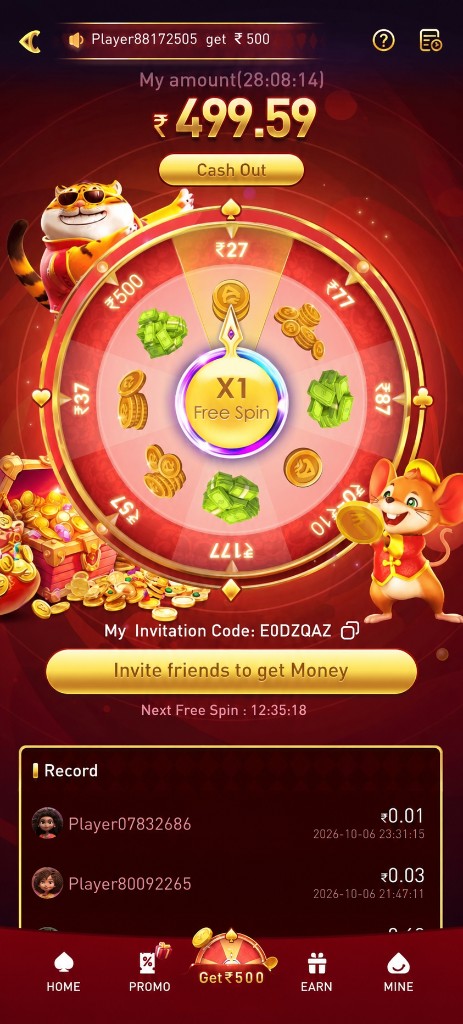
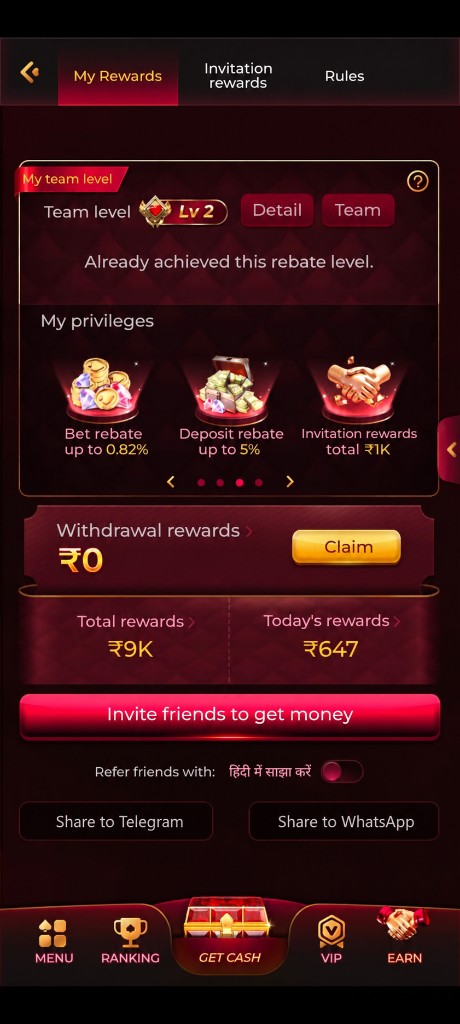
These pictures open with Download apk. They show a separate app, not a diagram of the card rules above. A wheel, a reward, or a withdrawal screen is that product’s own feature. It is not part of the Pagat table rules, and it is not a fairness certificate.

The card game rules detailed in this edition were cross-verified against established references, including Pagat.com’s Indian Rummy documentation (authored by Vasant Mali) and the public overview on English Wikipedia, both accessed on 7 October 2026. Legal disclaimers were reviewed on the same date with reference to the Supreme Court of India ruling in State of Tamil Nadu v. Junglee Games India Pvt. Ltd., 2026 INSC 594 (27 May 2026).
Where authoritative sources conflict, or where digital platforms typically introduce mechanics not present in traditional tabletop versions, we explicitly note that rules vary. This guide is compiled strictly through comparative literature analysis without live table testing or proprietary app audits; unverified platform behaviors are never presented as established facts.
Every published page displays its original publication date alongside its latest review date. Should source material change or verifiable errors be identified, our editorial team will update the content and revise the review timestamp accordingly.
This document serves as an informational research overview. It does not constitute legal advice, nor does it guarantee that future platform updates or specific table variations will align entirely with the examples provided.
It is a guide website. You can read the rules here. Download apk leaves this domain when the saved address is not rummygameonline.com. This page does not deal a hand or take a payment.
Three or more consecutive cards of one suit, with no joker used as a substitute. 5♥ 6♥ 7♥ is a pure sequence. See the worked examples.
All 13 cards are grouped, there are at least two sequences, and at least one sequence is pure. The declaration guide shows a hand that passes and hands that fail.
Yes. Even inside 13-card Indian rummy, the wild card used when a printed joker is turned, the size of a set, and the points for a wrong declaration are not identical everywhere.
In the Pagat table description, an ace, king, queen, jack, or ten counts 10. Cards from 2 to 9 count their face value. Jokers count 0. A pure sequence is excluded once you have one, and other valid groups are excluded only when you also have a second sequence. Online caps, often 80, are a separate house rule. The full points answer is in the FAQ.
Email [email protected] with the page address, the sentence you think is wrong, and the rule source you are comparing it with. The operator is Rummy.
Start with the round itself, or send a correction if a rule on these pages does not match the source it cites.